Opening Range Breakout (ORB) Strategy for Futures Trading
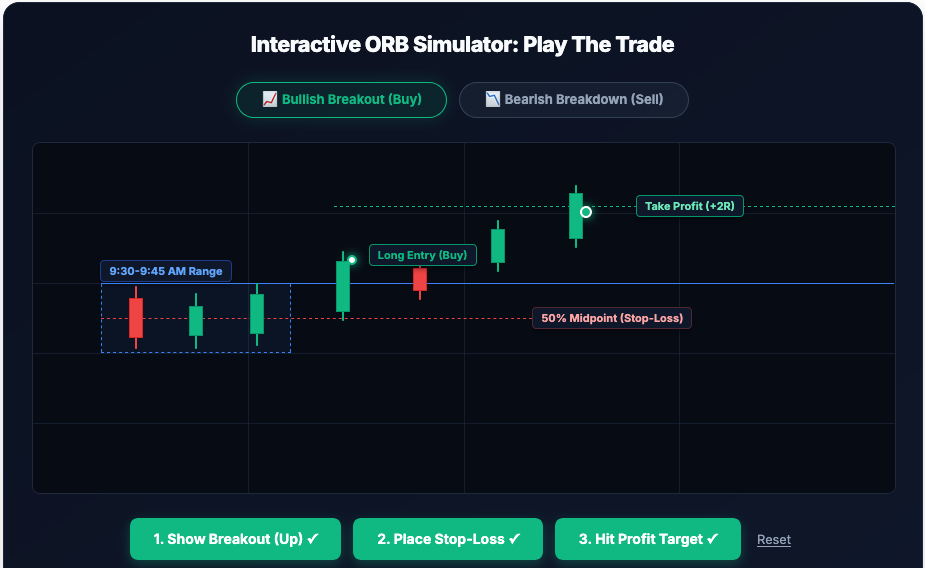
The Opening Range Breakout (ORB) isn’t just another indicator-based strategy; it’s a daily institutional event. Originally popularized by legendary commodities trader Toby Crabel, it focuses strictly on the first 15 minutes of regular trading hours—the exact moment when overnight institutional orders, breaking news, and retail flow violently collide. For U.S. equity index futures—like the highly popular Micro E-Mini S&P 500 (MES) and Nasdaq-100 (MNQ)—the New York Stock Exchange cash open at 9:30 AM EST injects massive liquidity into the market. During this initial 15-minute window (9:30 AM to 9:45 AM EST), bulls and bears battle to establish the day’s first equilibrium zone, leaving behind an Opening Range High and an Opening Range Low.